

If you’re ready to invest in paid advertising, one of the first questions you’ll run into is: should I run Meta Ads, Google Ads, or both?
It’s one of the most common questions small business owners ask — and the honest answer is that Meta Ads and Google Ads aren’t really competing for the same job. They work differently, reach people at different moments, and succeed for different reasons.
Understanding that difference is the key to spending your ad budget where it will actually convert.
What Is Google Ads?
Google Ads shows your business to people who are actively searching for what you offer. When someone types “emergency plumber near me” or “best CRM software for small business,” Google Ads puts your business directly in front of that search.
This is called intent-based advertising — you’re reaching people who already know they want something and are looking for it right now.
Google Ads can appear in several places:
- Search results (text ads above organic listings)
- Google Maps and local results
- YouTube (video ads)
- The Google Display Network (banner ads across millions of websites)
- Shopping tabs for ecommerce products
Think of Google Ads as showing up exactly when someone raises their hand and says, “I need this.”
What Is Meta Ads?
Meta Ads (running across Facebook and Instagram) works differently. Instead of targeting search intent, it targets people based on their interests, behaviors, demographics, and online activity even if they weren’t actively looking for your business at all.
This is called interruption-based or discovery advertising you’re showing up in someone’s feed while they’re scrolling, not while they’re searching.
Meta Ads can appear in:
- Facebook and Instagram feeds
- Stories and Reels
- Messenger
- The Meta Audience Network (partner apps and websites)
Think of Meta Ads as introducing your business to someone before they even knew they wanted it.
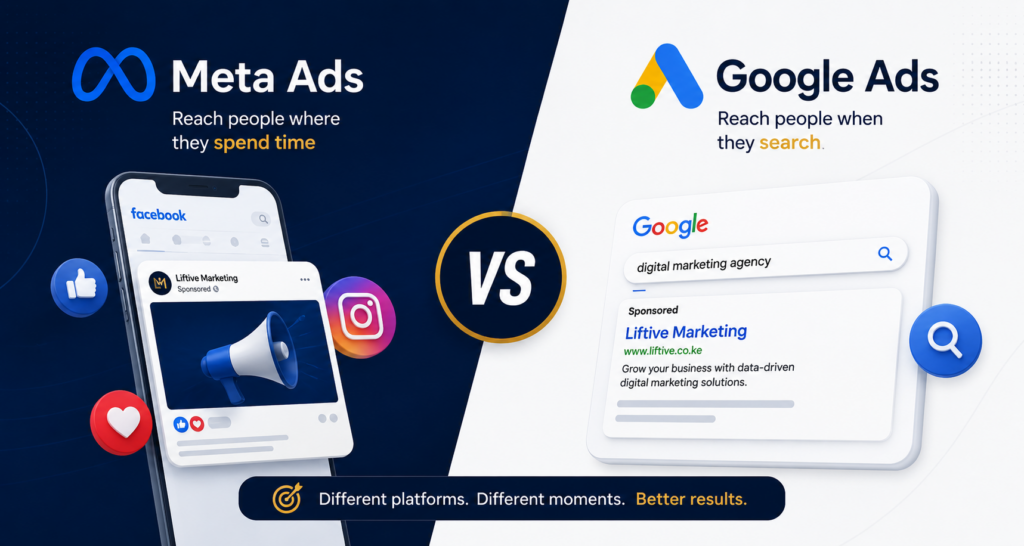
Meta Ads vs. Google Ads: What’s the Real Difference?
| Google Ads | Meta Ads |
|---|---|
| Targets active search intent | Targets interests, behaviors, and demographics |
| Reaches people who are ready to act | Reaches people before they’re actively looking |
| Strong for high-intent, “need it now” searches | Strong for visual storytelling and brand discovery |
| Text and shopping-focused ad formats | Highly visual — image, video, carousel formats |
| Often higher cost-per-click | Often lower cost-per-click, but longer path to purchase |
| Best for bottom-of-funnel conversions | Best for top and middle-of-funnel awareness |
Given that, the real question isn’t “Meta Ads or Google Ads?”
It’s “Where is my ideal customer in their buying journey and which platform reaches them there?”
When Google Ads Wins
1. Your Customer Already Knows They Need You
If people search for what you offer — plumbers, lawyers, HVAC repair, software solutions — Google Ads puts you directly in front of that demand at the exact moment it exists.
2. You Have a Clear, Specific Offer
Google Ads performs best when someone can search a specific need and find a specific answer. The clearer the match between the search and your ad, the higher your conversion rate.
3. You Want Faster, Higher-Intent Leads
Because the person is already searching, the path from click to conversion is typically shorter on Google Ads than on Meta.
When Meta Ads Wins
1. Your Product or Service Isn’t Something People “Search” For Yet
New products, unique services, or impulse-buy items often don’t have existing search demand. Meta Ads can introduce your offer to the right audience before they know to look for it.
2. Your Business Is Highly Visual
Restaurants, fashion, home decor, fitness, beauty, and similar businesses tend to perform exceptionally well on Meta because the platform is built around images and video.
3. You Want to Build Brand Awareness and Retarget Later
Meta Ads is powerful for staying top-of-mind. You can show your brand to a broad audience first, then retarget the people who engaged — moving them down the funnel over time.
Cost Comparison: Which One Is Cheaper?
There’s no fixed answer, but as a general pattern:
- Google Ads often has a higher cost-per-click, but the traffic tends to convert faster because of built-in intent.
- Meta Ads often has a lower cost-per-click, but may need more touchpoints (and a retargeting strategy) before someone converts.
In practice, this means Google Ads can look more expensive per click while actually being more cost-effective per sale for high-intent industries — and Meta Ads can look cheaper per click while requiring a longer nurture sequence to reach the same result.
Can You Use Both Together?
Yes — and for many businesses, this is the strongest approach.
A common, effective strategy looks like this:
Meta Ads introduces your brand → builds awareness and interest → Google Ads captures the person once they start actively searching for a solution → Meta Ads retargets people who visited your site but didn’t convert
Used this way, Meta Ads fills the top of your funnel while Google Ads captures demand at the bottom each platform doing the job it’s actually built for.
Which One Should You Start With?
If you’re working with a limited budget and need to choose one platform first, consider this:
Choose Google Ads First If:
People actively search for your product or service, you have a clear service area or offer, and you need leads or sales relatively quickly.
Choose Meta Ads First If:
Your product is visual, new, or not yet something people search for by name, and you’re focused on building brand awareness and audience first.
Choose Both If:
You have the budget to run a full-funnel strategy and want to capture both active searchers and potential customers who don’t know about you yet.
The Bottom Line
Meta Ads and Google Ads aren’t rivals — they’re built for different moments in the customer journey. Google Ads meets people who already know what they want. Meta Ads introduces your business to people before they knew they wanted it.
The businesses that get the best return typically don’t ask “which platform is better” they ask where their customer actually is, and meet them there.
Need Help Deciding Where to Spend Your Ad Budget?
Lifitive Marketing helps businesses build and manage Facebook, Instagram, and Google Ads campaigns that are matched to where their customers actually are in the buying journey not a one-size-fits-all approach.
If you’re not sure whether Meta Ads, Google Ads, or a combination of both is right for your business, get in touch for a free consultation.